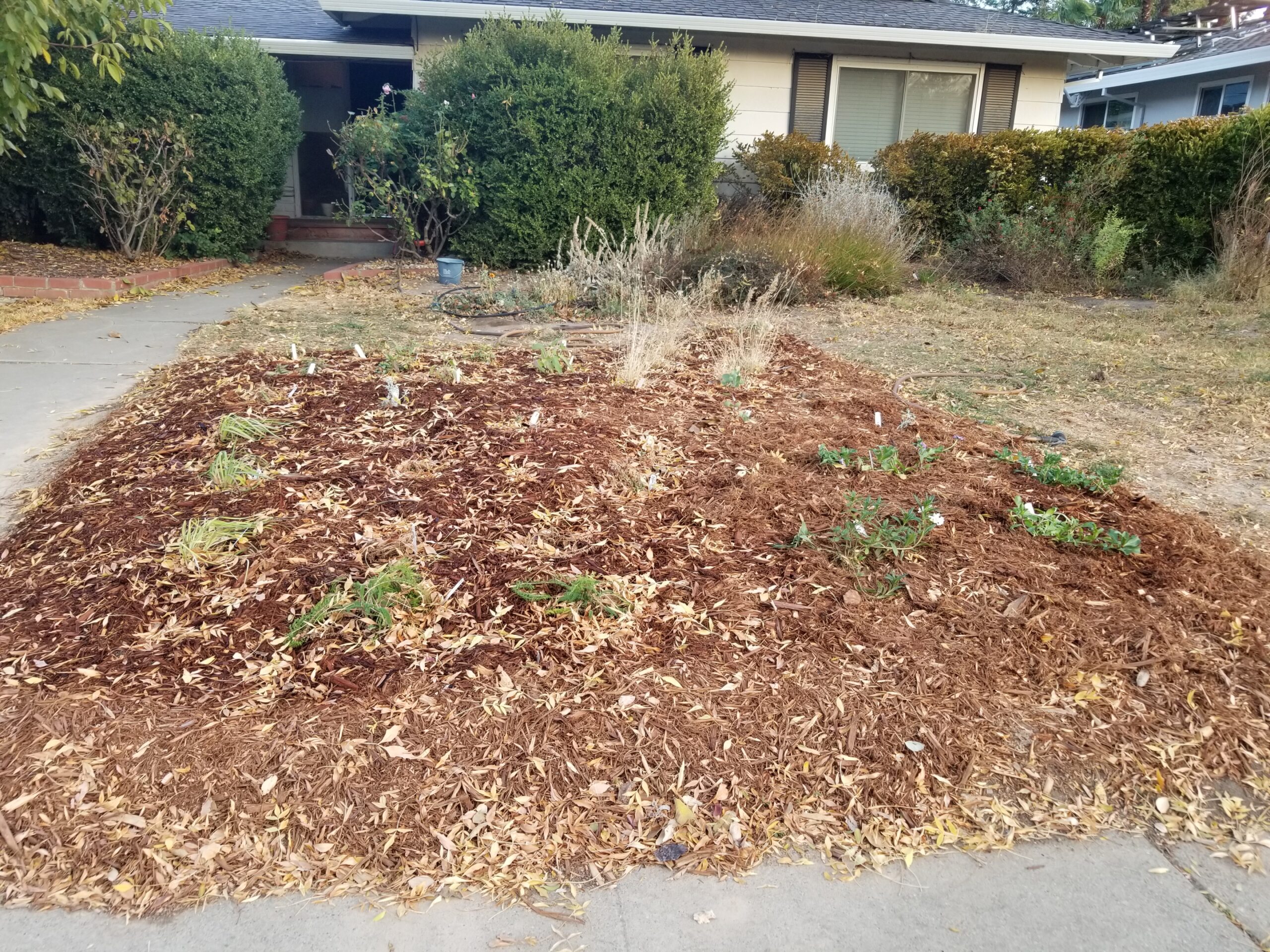
I love reading about, watching and photographing pollinators, beneficial insects, and caterpillars so the natural next step for me is to provide a healthy habitat for native wildlife. Although I have used California native plants in other gardens areas, I had not embarked on creating an exclusive native plant garden. I selected a dead and dying area in my yard for a fourteen-by-fourteen-foot garden. Even though I spent a lot of time planning the garden, I finally settled on a design using plants available from a local plant sell inventory. (Fall, 2024)
I started with Sisyrinchium bellum (Blue eyed grass), a member of the Iridaceae family. Blooming from January to June, blue eyed grass has a height of one to two feet and has small purplish-blue flowers. The plant is on several fire-resistant lists. It is a plant that goes dormant in the summer although it may continue in less dry areas. The plant is self-sowing, can be propagated by division of its rhizomes, and the flower stems can be rooted. It tolerates temperatures down to twenty degrees F and supports butterflies, bees, and Syrphid flies. These plants are arranged along the walk to the house.
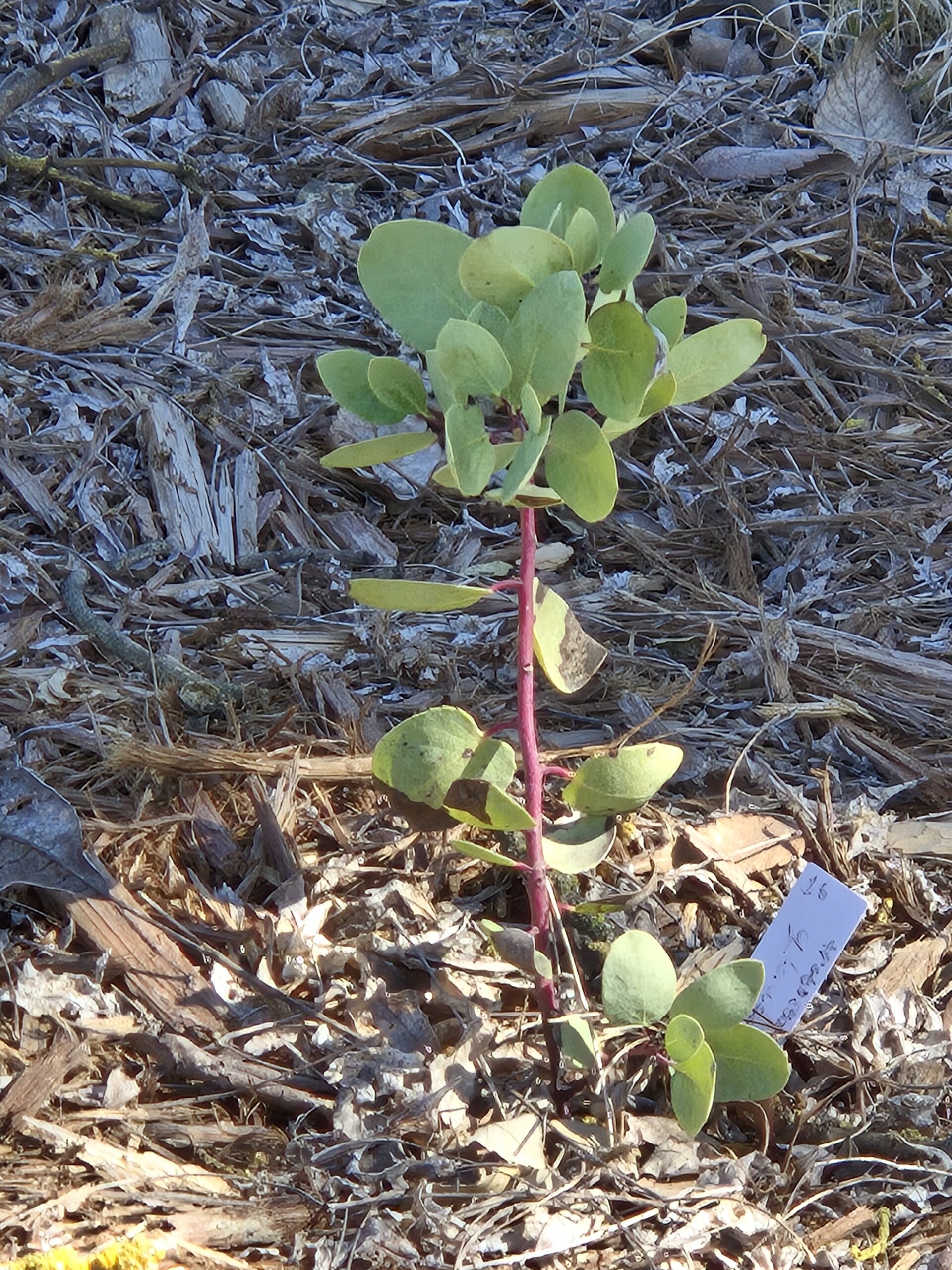
The central focus of the garden, Arctostaphylos manzanita 'Dr. Hurd' (Dr. Hurd manzanita), is an evergreen, deciduous shrub or small tree with a dark mahogany red barked stems and trunk in the Ericaceae family. Dr. Hurd has creamy white flowers in February, March, April, and May. Butterflies, Moths, Songbirds, Hummingbirds, and other pollinators are attracted to this plant. Dr. Hurd is hardy to 15 degrees F. Prune in late summer to maintain height and shape.
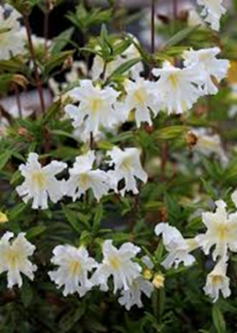
Diplacus grandiflorus- ‘White’ (Largeflower Bush Monkeyflower) is a semi-evergreen perennial that has white blooms from March to June in the Scrophulariaceae family. Diplacus attracts bees, butterflies and hummingbirds. It is a likely host plant for the Variable Chesockerspot Butterfly. This can be a very showy plant, so I placed it on the street side of the garden.
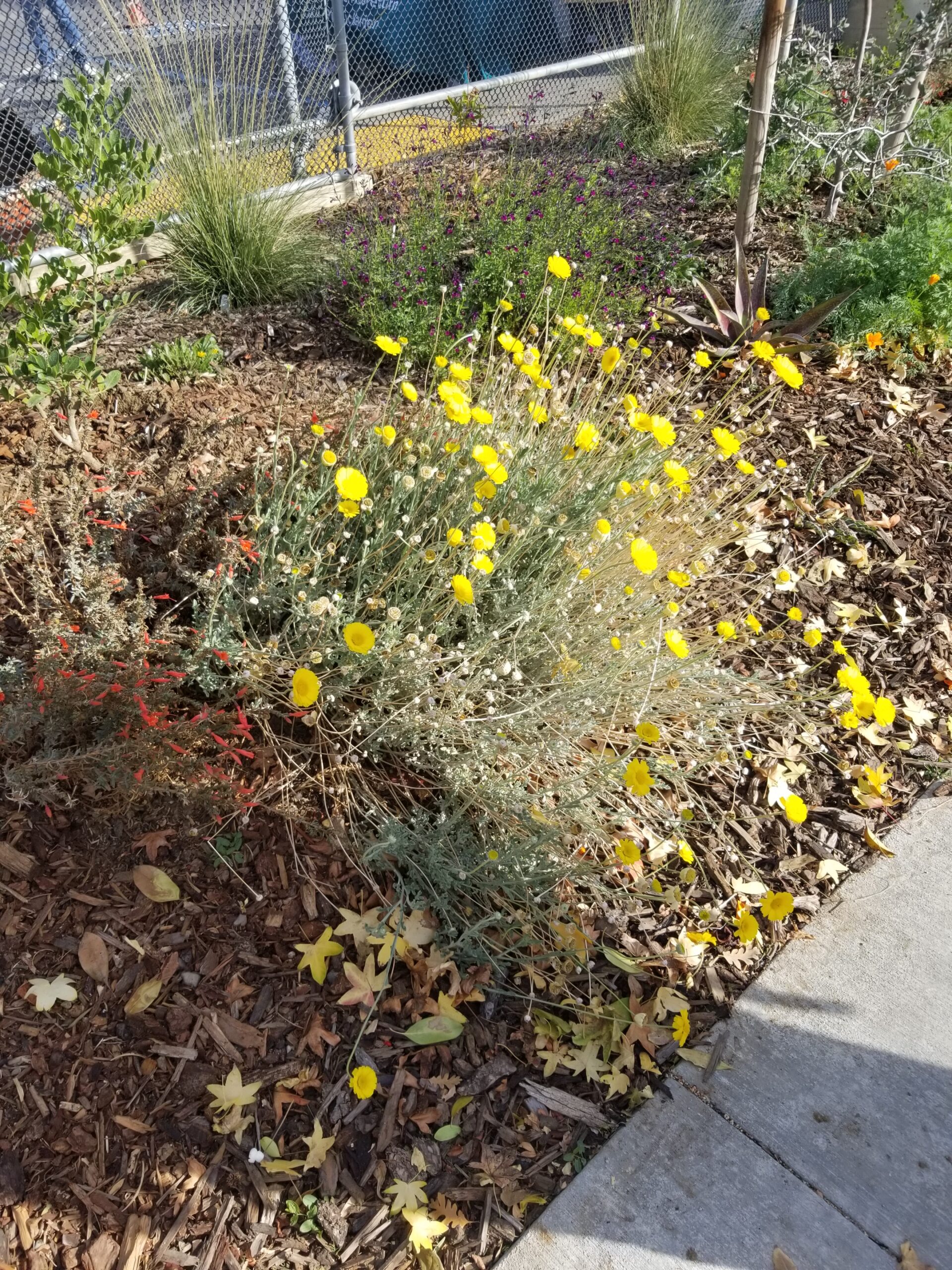
Baileya multiradiata (desert marigold) was selected for yellow blooms to accompany the blue-eyed grass. Baileya multiradiata is a member of the Asteraceae family and has large daisy-like yellow flowers with silvery foliage. It blooms from March to December. It is self-seeding but doesn’t spread very aggressively. It is cold tolerant to 38 degrees F. This plant attracts bees and butterflies including the Leanira Checkerspot and Desert Orangetip for nectar. Birds, small mammals, reptiles, and insects eat the seeds.
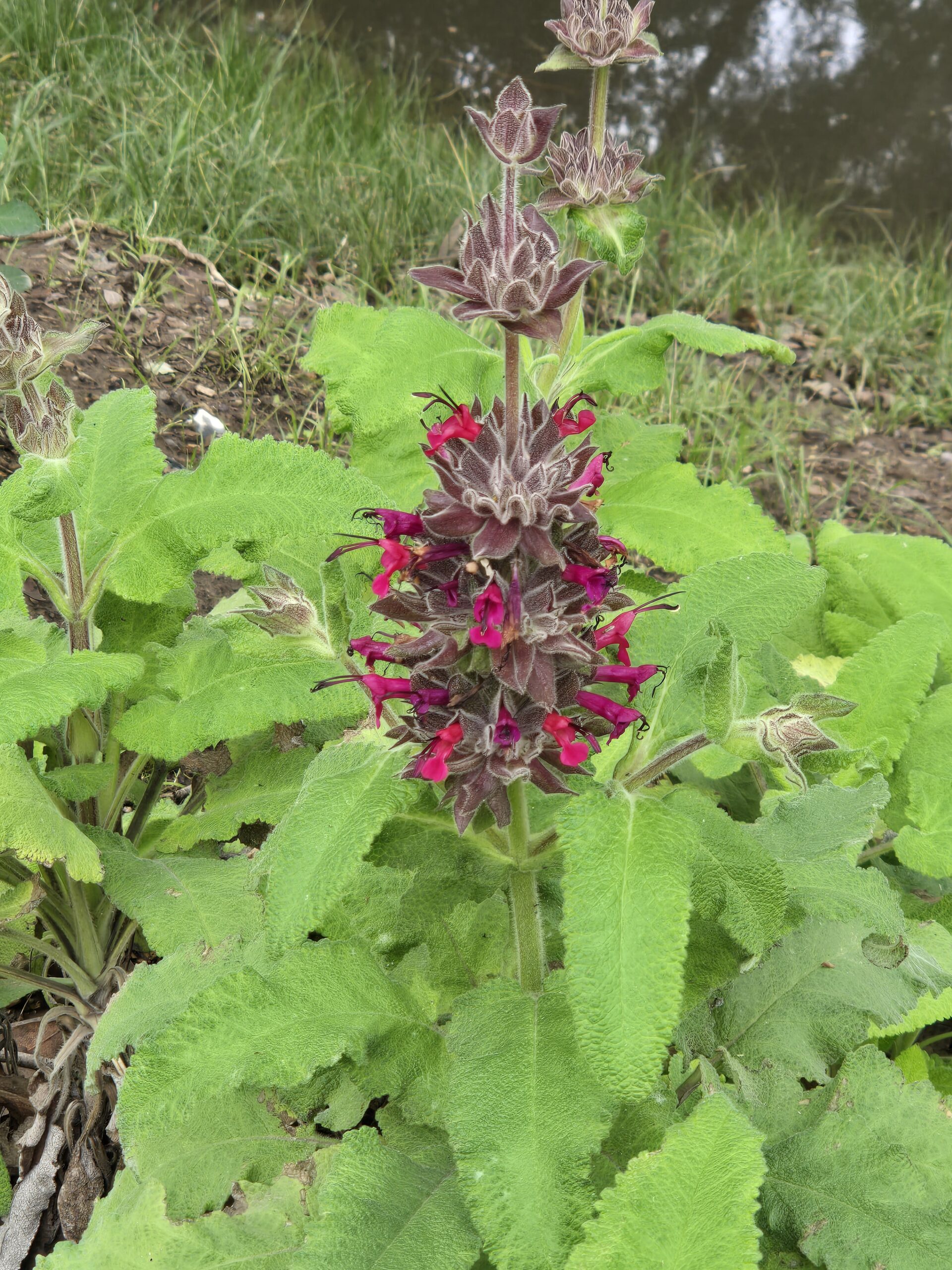
Salvia spathacea Las Pilitas (Hummingbird Sage) has rose-pink blooms on 18-inch-tall stalks from late winter into summer and has a pleasant fragrance. It grows in a mounding shape to 18 inches in height and spreads by underground rhizomes. This cultivar is shorter in height than other spathacea cultivars. It attracts bees, butterflies, and hummingbirds. This plant is evergreen in temperatures in the mid-twenty degrees F but is root hardy to at least down to zero degrees F. The spreading rhizomes can be dug up and replanted elsewhere in late fall or early winter to keep the plant from spreading to unwanted areas.
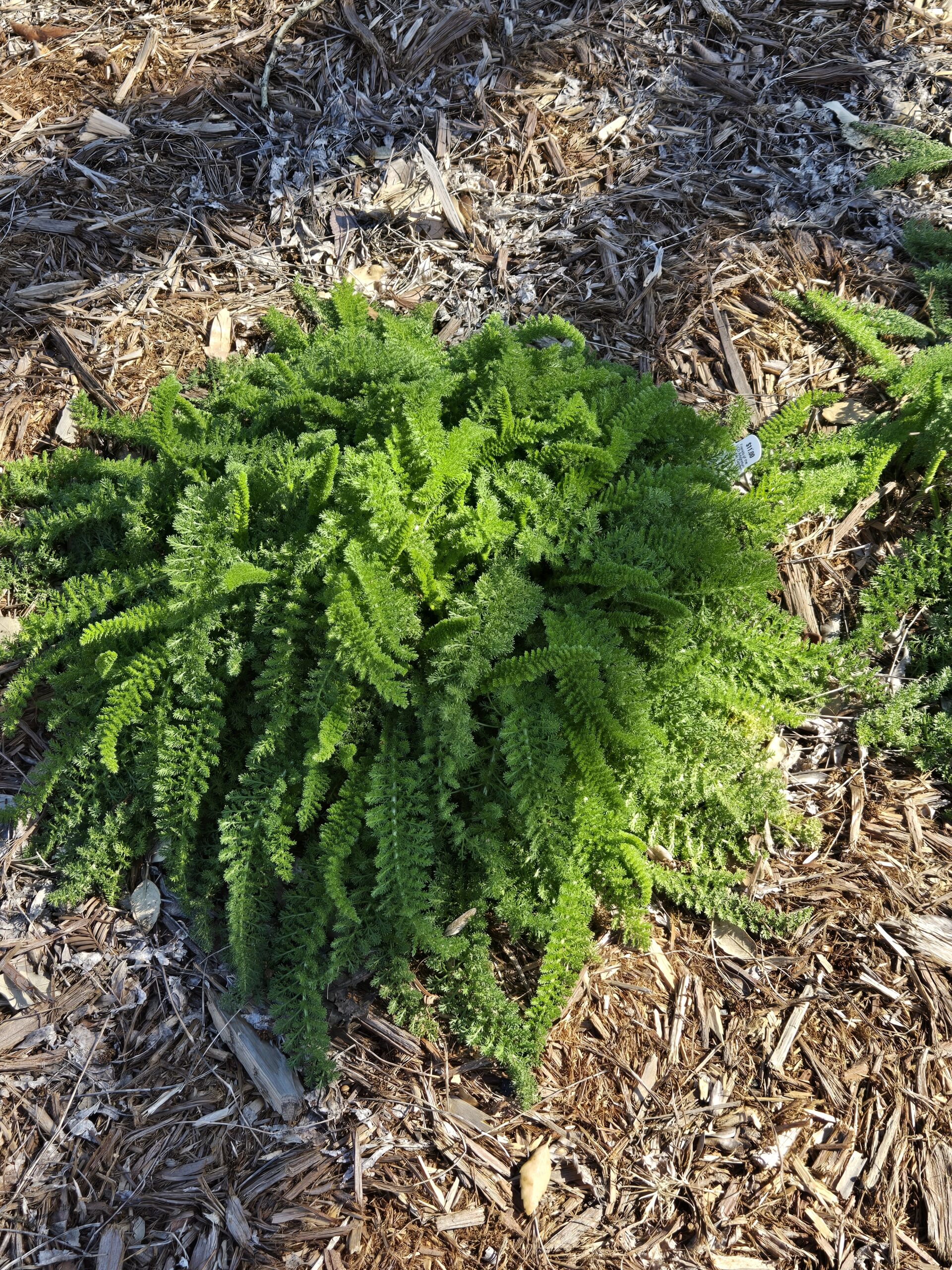
Achillea millefolium 'Sonoma Coast' is a deciduous, semi evergreen perennial member of the Asteraceae family that spreads by rhizomes. It is one by two feet in size. It has white blooms from April to September. It attracts bees, butterflies and birds.
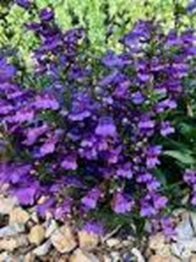
Penstemons Catherine de la Mare is a twelve-to-eighteen-inch deciduous perennial with electric blue flowers with shades of pink and purple that blooms in May. It attracts hummingbirds, bees, butterflies and other pollinators.
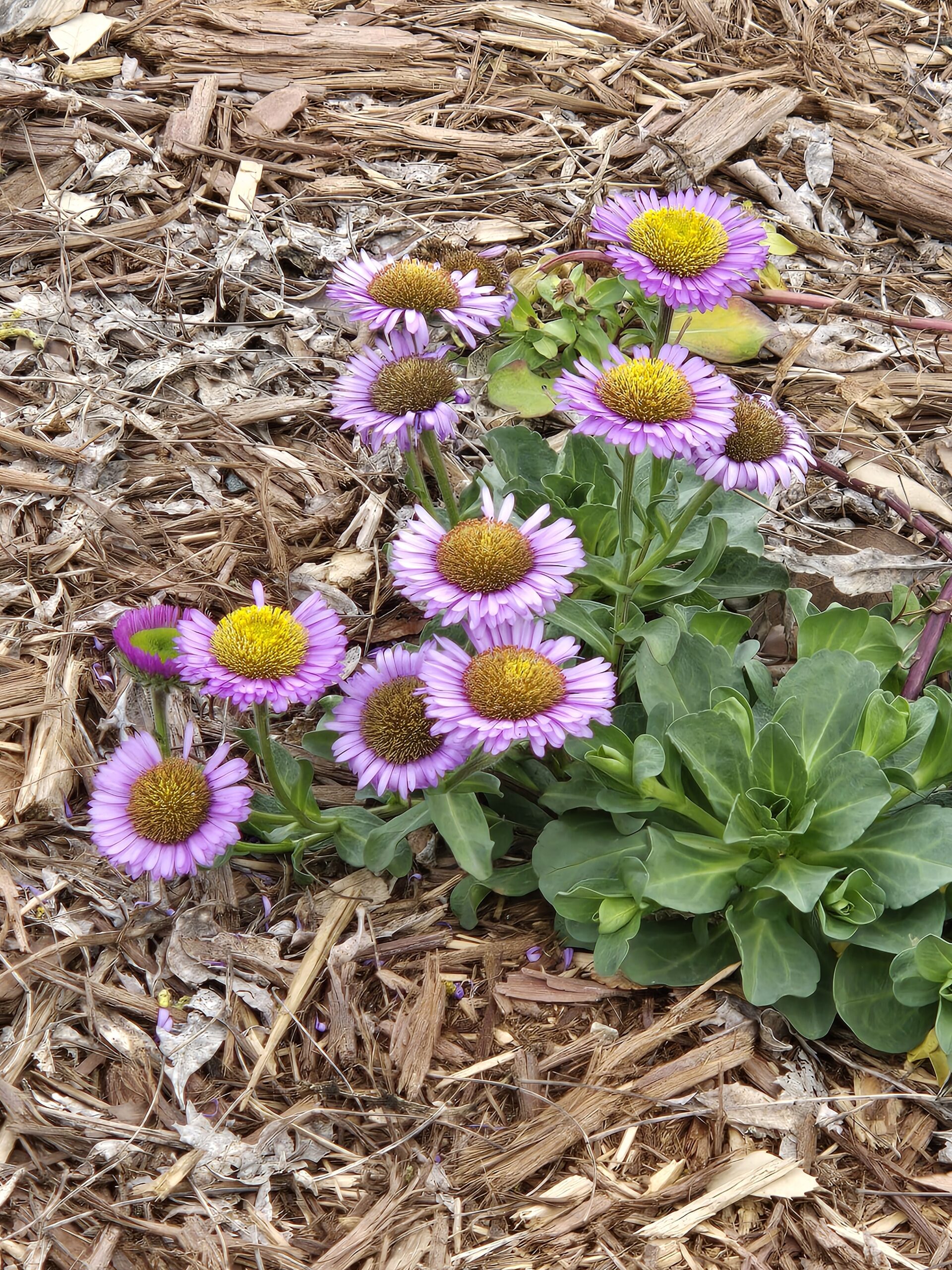
Erigeron glaucus 'Bountiful' (Seaside Daisy) is an evergreen plant that has two-inch diameter lavender daisies with yellow centers that bloom from May to September. The plant is six to twelve inches by two to three inches in size and is cold tolerant to fifteen degrees F. It attracts bees, butterflies, and caterpillars. I placed three of these plants on the side near the street side of the garden.
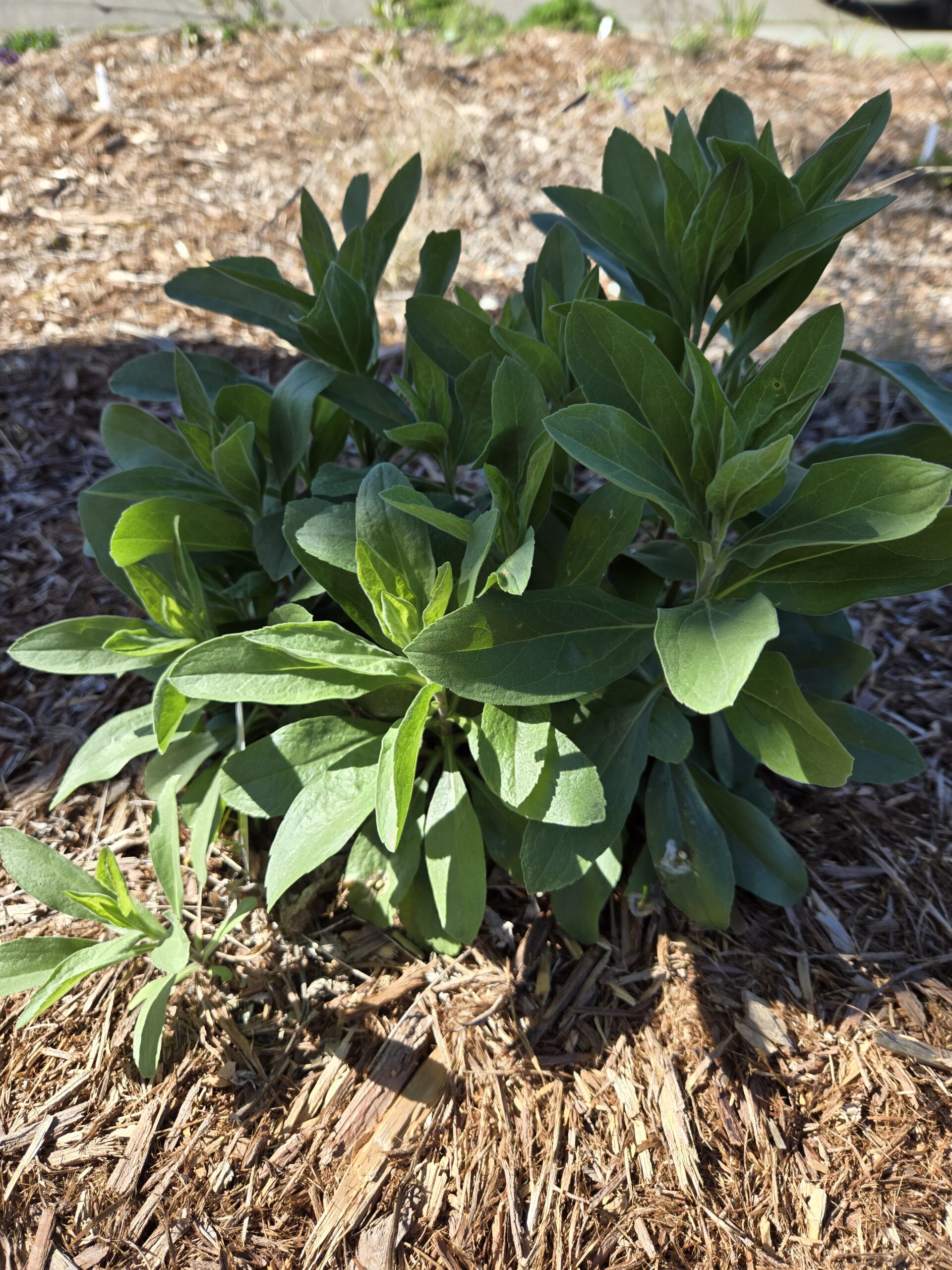
Solidago Californica ‘Cascade Creek’ (Goldenrod), a member of the Asteraceae family, is an evergreen perennial with yellow flowers that bloom in late summer and fall when many other plants are dormant. It is two to three feet tall and spreads by rhizomes. Goldenrod is not the plant that many blame to cause allergies as its pollen is sticky to adhere to a bee and does not blow in the wind. It can be cut back within two inches in late winter. The plant forms a dense ground cover in winter and sprouts stems in spring.
Asclepias fascicularis (Narrowleaf Milkweed) is a perennial plant with lavender or pinkish white flowers blooming June through September. It can reach three feet tall and is dormant in winter, often dying back to the ground. The plant tolerates cold to five degrees F. It is the host plant for the Monarch butterfly and attracts bees and beneficial insects. Calscape tells us, “Not to cut the dry stems down too soon as Orioles may use them for nesting.” (A Bullock's Oriole was spotted at West Davis Pond in April 2024.) -still looking for this plant.
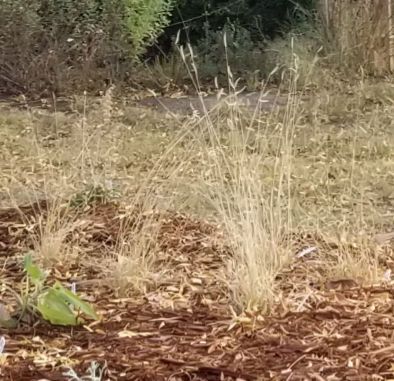
Bouteloua gracilis 'Honeycomb' (Blue Grama grass) is a warm season perennial grass six to twenty-four inch tall by two feet wide preferring full sun and cold tolerant to fifteen degrees F. It attracts caterpillars and is host to the Pahaska Skipper, Uncas Skipper, Ridings' Satyr, Orange Skipperling, and Woodland Skipper. Blue Grama provides seeds for birds and other animals as well as cover and habitat for birds and small mammals.
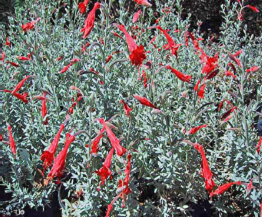
Epilobium 'Roger's U.C. Hybrid' (California Fuchsia UC Hybrid) is a perennial with orange-red trumpet shaped blooms July to September and narrow silver-gray foliage. It grows one foot tall and three feet wide and spreads by rhizomes. Pruning plants down to a few inches in late autumn helps to rejuvenate them for the following year. The plant supports hummingbirds.
Epilobium canum 'Summer Snow' (California Fuchsia) is a winter deciduous perennial with white trumpet shaped flowers blooming from July to September. It grows to ten inches tall and two feet wide, forming a low mat and spreads by rhizomes. Do not prune until the plant is established which may be about two years. Once established prune to two inches in winter after blooming. This plant is cold tolerant up to fifteen degrees F and attracts hummingbirds, birds, and butterflies.
Trees and shrubs nearby
The Western Redbud (Cercis occidentalis) is a deciduous tree or shrub six to twenty feet tall and wide, with small light green heart-shaped leaves early in the season and darken as they age. It has clusters of showy pink to magenta flowers from March through May. It has three-inch-long flat pods that begin green and go to purply-brown color. It is cold tolerant to fifteen degrees F and requires a cool winter. It attracts hummingbirds, bats, birds, bees, caterpillars and butterflies. It is popular with leaf cutter bees.
Ceanothus ‘dark star’ (dark mountain lilac) is an evergreen shrub in the Rhamnaceae (Buckthorn) family that is six to eight feet tall by eight to twelve feet wide. It has showy cobalt blue clusters of flowers in spring and tiny dark green dimpled leaves. It is hardy to fifteen degrees F. Calscape tells us: “All ceanothus are attractive to deer, birds and pollinators. Deer eat the flowers and leaves; birds eat the small, black fruits; bees, butterflies, and moths feed from the flowers. Once mature, its branches also create a safe haven for birds and small wildlife.”
Baccharis pilularis (Coyote Bush) is a mounding evergreen shrub in the Asteraceae family with small green leaves. It has small white and yellow flowers, the male flowers are yellow, female flowers are white and bloom from July to October. “This and other Baccharis species are nectar sources for most of the predatory wasps, native skippers (small butterflies), and native flies in their ranges.” (Wikipedia)
Ribes sanguineum (Red Flowering Currant) is a deciduous shrub that blooms from January to July with tassel-like flowers that are dark pink to red and has dark purple berries in August and September. It grows from six to eight feet high and six to ten feet wide. supports hummingbirds, bats, birds, bees, caterpillars, and butterflies. It is the host plant for the Ceanothus Silkmoth and likely eighty-five other moths and butterflies.